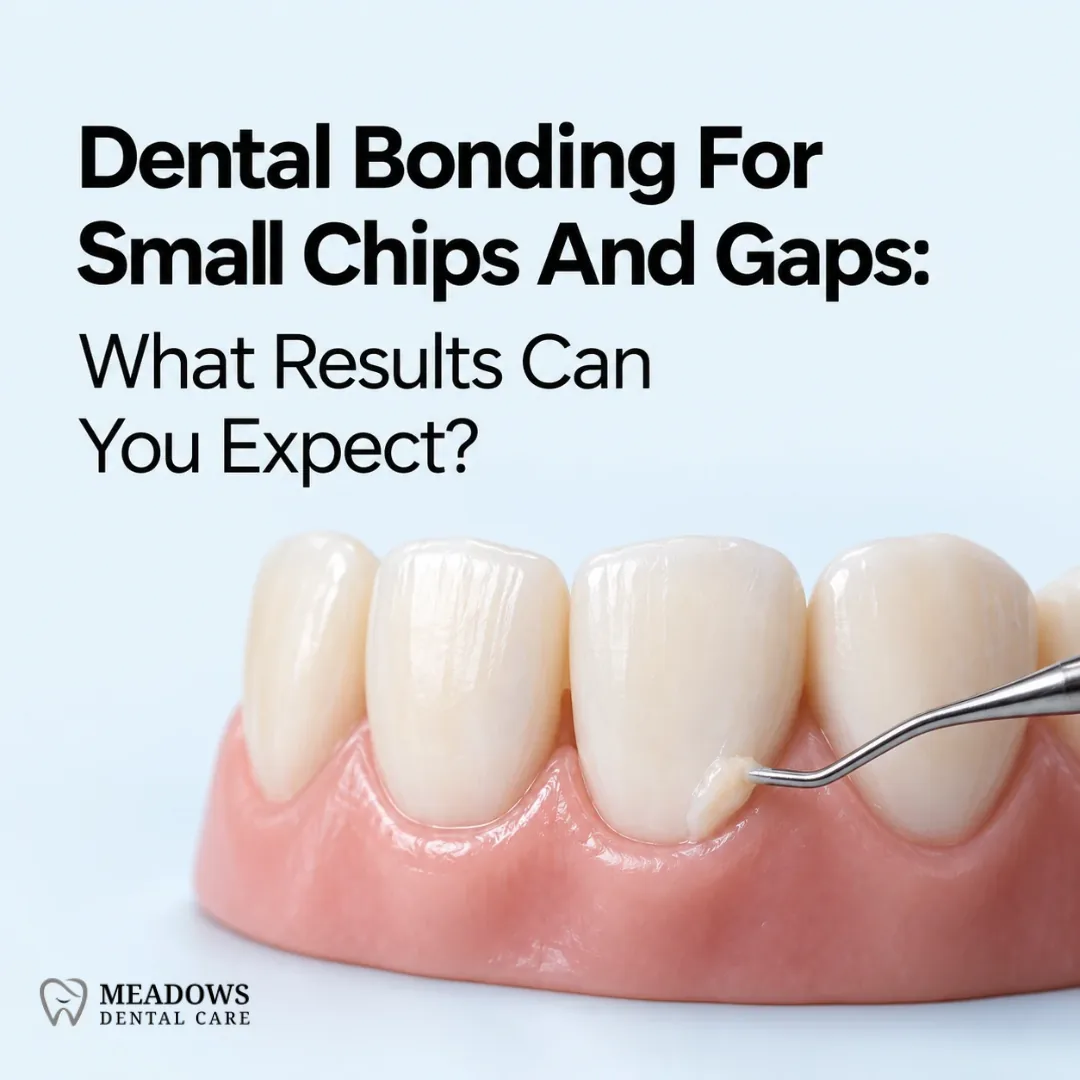
Many people hide a small chip or a tiny gap when they smile. A chipped tooth can feel like a loose button on a favorite shirt. It can make them self conscious at work or on a date.
Dental bonding uses tooth colored composite resin to fix small chips and close little gaps. The procedure often takes one visit and uses no shots for minor repairs. Here you will understand what bonding looks like, how long it lasts, and how it compares to veneers and crowns.
Dental bonding uses a tooth-colored composite resin to repair chips and fill small gaps. A dentist roughens the enamel, applies a bonding agent, sculpts the resin, then hardens it with a curing light.
The material matches enamel color and bonds to the tooth for quick tooth repair and smile enhancement.
A patient who had a small chip fixed says the visit took about 45 minutes and felt simple. A dentist who performs bonding often notes it suits minor imperfections and gap filling without removing much tooth structure.
Dental bonding handles many small tooth problems that may cause you to hide your smile. It smooths over rough spots and closes tiny spaces, making teeth look whole again.
Chips on teeth can be bothersome. Many people feel self-aware about these minor flaws. Fortunately, dental bonding offers a quick fix for small chips. This process uses composite resin to fill and repair damaged areas. The dentist shapes the resin to match the tooth, restoring its natural look.
Bonding can often be completed in one visit. Patients sit back as the dentist applies layers of resin and hardens it with a special light. This treatment repairs chipped teeth and also improves smiles overall.
Those who choose dental bonding appreciate its effectiveness and simplicity in achieving beautiful results quickly.
Dental bonding works wonders for closing minor gaps between teeth. Cosmetic dentistry offers this procedure as a quick fix, providing effective results in just one visit. The dentist prepares the tooth and then applies a special composite resin that matches the natural shade of teeth.
Many people feel happier after gaining a more polished smile through dental bonding. The transformation can be quite noticeable. Bonding gives individuals improved confidence when they flash their smiles in social situations or at work events.
It’s an excellent choice for anyone looking to enhance their appearance without undergoing lengthy treatments like braces or veneers.
The dental bonding procedure is a straightforward process. Patients can expect a quick fix that improves their smile.
People often feel amazed at how simple and effective this cosmetic procedure can be for enhancing their smiles!
Dental bonding offers a natural look for those with small chips or gaps in their teeth. The dentist uses composite resin that matches the color of the patient's natural teeth. This blend allows for an aesthetic enhancement, making imperfections nearly invisible.
Patients often leave the office feeling more confident about their smiles. Many find it hard to spot bonded areas, thanks to skilled placement and color matching. Dental bonding can effectively improve smiles while appearing seamless with existing teeth.
Dental bonding typically lasts between three to ten years. The duration depends on several factors, such as the location of the bond and how well a person cares for their teeth. Bonding can wear down due to daily activities like chewing or grinding teeth. Good oral hygiene helps maintain the bonded area.
Regular dental visits play an important role in keeping bonded teeth in great shape. A dentist can check for signs of damage or wear during routine cleanings. With proper care, patients enjoy lasting smiles enhanced by cosmetic dentistry techniques like dental bonding.
Caring for bonded teeth is crucial for maintaining their beauty. Proper care helps prevent any issues down the road.
Here is a quick comparison of dental bonding and other cosmetic choices.
| Option | What it fixes | Procedure length | Cost | Durability | Look | When to pick it |
|---|---|---|---|---|---|---|
| Dental Bonding | Small chips, minor gaps, surface flaws. | One visit. Often 30 to 60 minutes per tooth. | Low to moderate. Often much cheaper than veneers. | Short to medium. Typically 3 to 7 years with care. | Very natural if matched well by the dentist. | Best for quick fixes and limited budgets. |
| Porcelain Veneers | Shape changes, color issues, larger gaps. | Two to three visits. Lab work needed. | High. Often several times the cost of bonding. | Long. Often 10 to 15 years or more. | Extremely lifelike and stain resistant. | Good for major cosmetic makeovers. |
| Dental Crowns | Broken teeth, big chips, weak teeth, root canal teeth. | Two visits commonly. Prep and lab fabrication. | Moderate to high. More than bonding, similar to veneers. | Long. Often 10 years or longer with maintenance. | Very natural, covers whole tooth. | Choose when strength and protection matter most. |
| Orthodontics (Braces, Aligners) | Gaps, misalignment, bite issues. | Months to years. Depends on case complexity. | Moderate to high. Varies by treatment length. | Long term. Results last with retainers. | Teeth look natural after movement. | Pick when alignment and bite must be corrected. |
| Teeth Whitening | Stains and discoloration only. | One office visit or at-home courses over days. | Low to moderate. Affordable compared to restorations. | Months to a few years, based on habits. | Brightens natural enamel, does not change shape. | Best for color improvement alone. |
| Composite Veneers | Shape and color changes, small gaps. | One or two visits. Chairside work. | Moderate. Less than porcelain veneers. | 5 to 10 years with proper care. | Good esthetics, but may stain over time. | Consider when cost and time are limited. |
Patients should weigh cost, time, and how long results must last.
Dental bonding can break or chip, just like any other cosmetic procedure. If this happens, it’s usually a quick fix. A dentist can repair minor imperfections in no time using composite resin.
Some patients have experienced this firsthand; they returned to their dental office and walked out with smiles restored.
Ignoring the damage isn't wise. Bonding that chips can leave teeth vulnerable to further problems. It's best to address these issues swiftly rather than waiting for them to worsen. Regular check-ups help maintain oral health and ensure that those small repairs stay intact longer.
Dental bonding is a procedure that fixes small chips and gaps in teeth. A tooth-colored resin is applied to the affected area, then shaped and polished to blend with your natural tooth.
Dental bonding typically lasts several years, but it can vary based on your oral habits. Good care helps maintain its appearance; avoid hard foods and practice good hygiene.
Yes, when done correctly, dental bonding looks very natural. The resin matches the color of your teeth closely, making it hard for others to notice any difference.
No, dental bonding usually involves little discomfort. Many people find it quick and easy; some even describe it as a breeze compared to other procedures like fillings or crowns.
Tell us a little about what you need — we'll be in touch shortly.
9600 S I-35 Frontage Rd Bldg S #275, Austin, TX 78748, United States

Hi! I'm Tooth fairy! Your AI Assistant Ask me anything