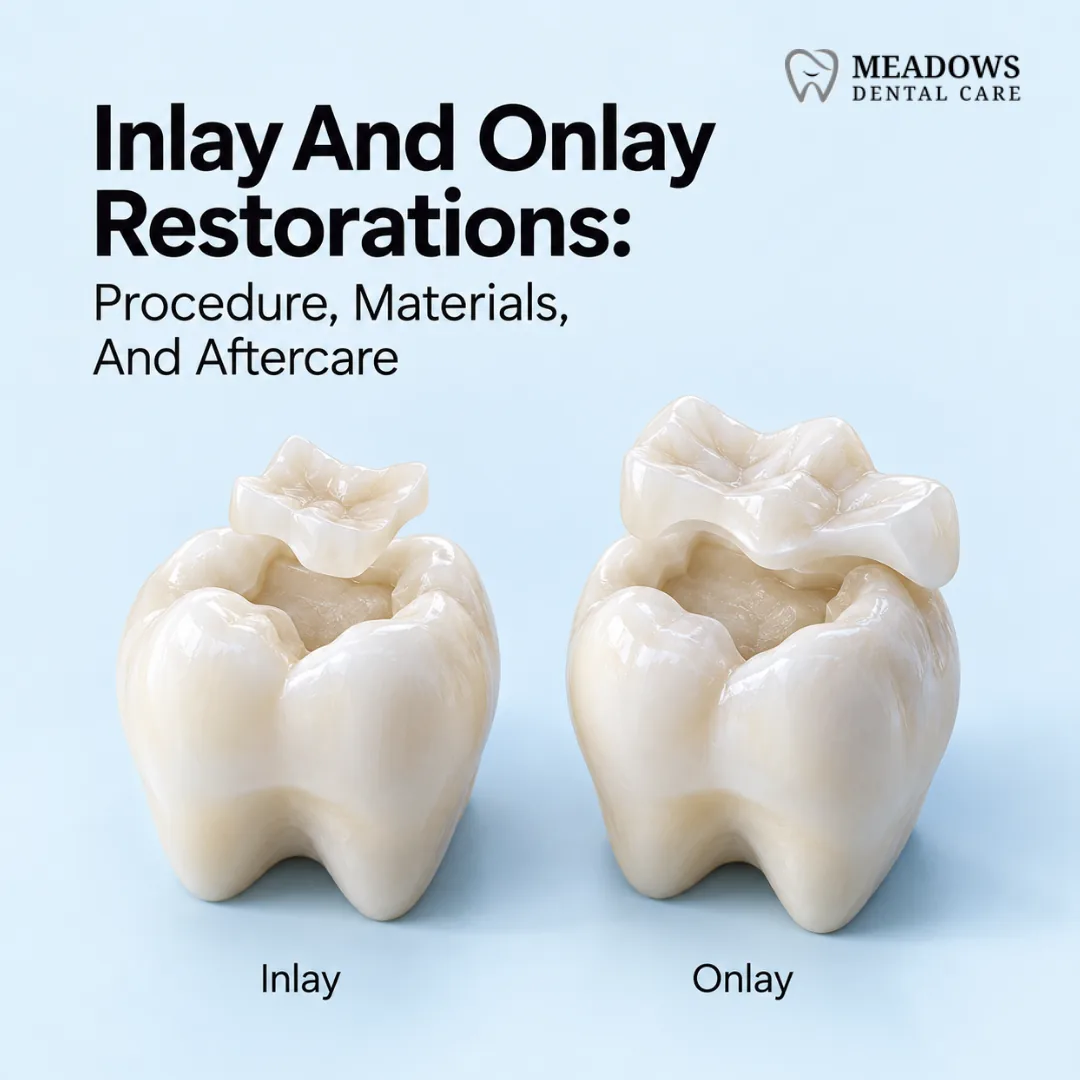
Many patients feel a sharp ache or see a chip and worry about losing a tooth. They do not always need a full crown. Inlay and onlay restorations repair large cavities and fractured teeth while saving more natural teeth.
One fact, inlays and onlays often preserve more tooth structure than crowns. Here you will understand the procedure, materials, and aftercare in plain terms.
This section explains the step-by-step inlay and onlay procedures. It covers exams, prep, lab work, bonding, and follow-up.
Dentists have several materials to fix broken or damaged teeth. Each choice comes with its own pros and quirks, making the right pick important for lasting smiles.
Ceramic options for inlay and onlay restorations offer a blend of aesthetics and durability. These materials match the natural color of teeth, making them popular among patients seeking tooth restoration that looks good. Ceramics resist staining better than many alternatives, so they keep smiles bright over time.
Patients appreciate how well ceramics bond to tooth structure. This strong connection improves their performance in daily activities like chewing or biting into an apple. Many people find comfort knowing these restorations can last for years with proper care.
Composite resin offers a great option for inlay and onlay restorations. This material blends well with natural teeth, providing a seamless look. It comes in various shades to match different tooth colors. Dentists often use composite resin for its versatility and aesthetic appeal.
The procedure involves preparing the tooth by removing decay and shaping it. Afterward, the dentist applies layers of composite material directly to the tooth. They use light to cure each layer, creating a strong bond. After filling, patients can enjoy improved oral health without sacrificing appearance!
Gold alternatives for dental restorations include materials like porcelain and composite resin. These options provide a strong, aesthetic finish while being less expensive than gold.
Porcelain can mimic the look of natural teeth, making it an attractive choice for many patients. Composite resins are versatile and bond well to teeth, offering a seamless repair.
Patients often appreciate these materials due to their affordability and effectiveness. They allow dentists to restore fractured teeth without compromising on appearance or functionality.
A recent study found that porcelain inlays last about 10-15 years with proper care; composite resins may need replacement sooner but still deliver good durability when maintained correctly. Choosing the right material hinges on personal preferences and specific dental conditions.
Caring for inlays and onlays keeps them looking great and functioning well. One of the best steps is to maintain good oral hygiene. Brushing twice a day helps remove plaque, while flossing daily prevents food from getting stuck around restorations. This simple routine protects overall oral health.
Patients often worry about specific care tips after getting these restorations. They should avoid hard foods right after the procedure. Soft foods make healing easier, especially during the first few days.
After that, patients can eat normally, but they should always be gentle with their teeth. Regular dental check-ups also help monitor any changes or issues that may arise over time.
Inlay and onlay restorations are dental procedures used to repair damaged teeth. They fit into the tooth's structure, providing strength and support. Inlays sit inside the tooth, while onlays cover one or more cusps.
The process starts with a dentist examining your tooth. They will remove decay and take impressions of your tooth. Then they create a custom restoration using materials like porcelain or resin. After that, you return for placement.
Common materials include porcelain, composite resin, and gold. Porcelain blends well with natural teeth color; composite resin offers flexibility; gold provides durability but is often less aesthetic.
Aftercare is crucial for longevity. Avoid hard foods right away to prevent damage. Maintain good oral hygiene by brushing twice daily and flossing regularly to keep them clean and healthy.
Tell us a little about what you need — we'll be in touch shortly.
9600 S I-35 Frontage Rd Bldg S #275, Austin, TX 78748, United States

Hi! I'm Tooth fairy! Your AI Assistant Ask me anything