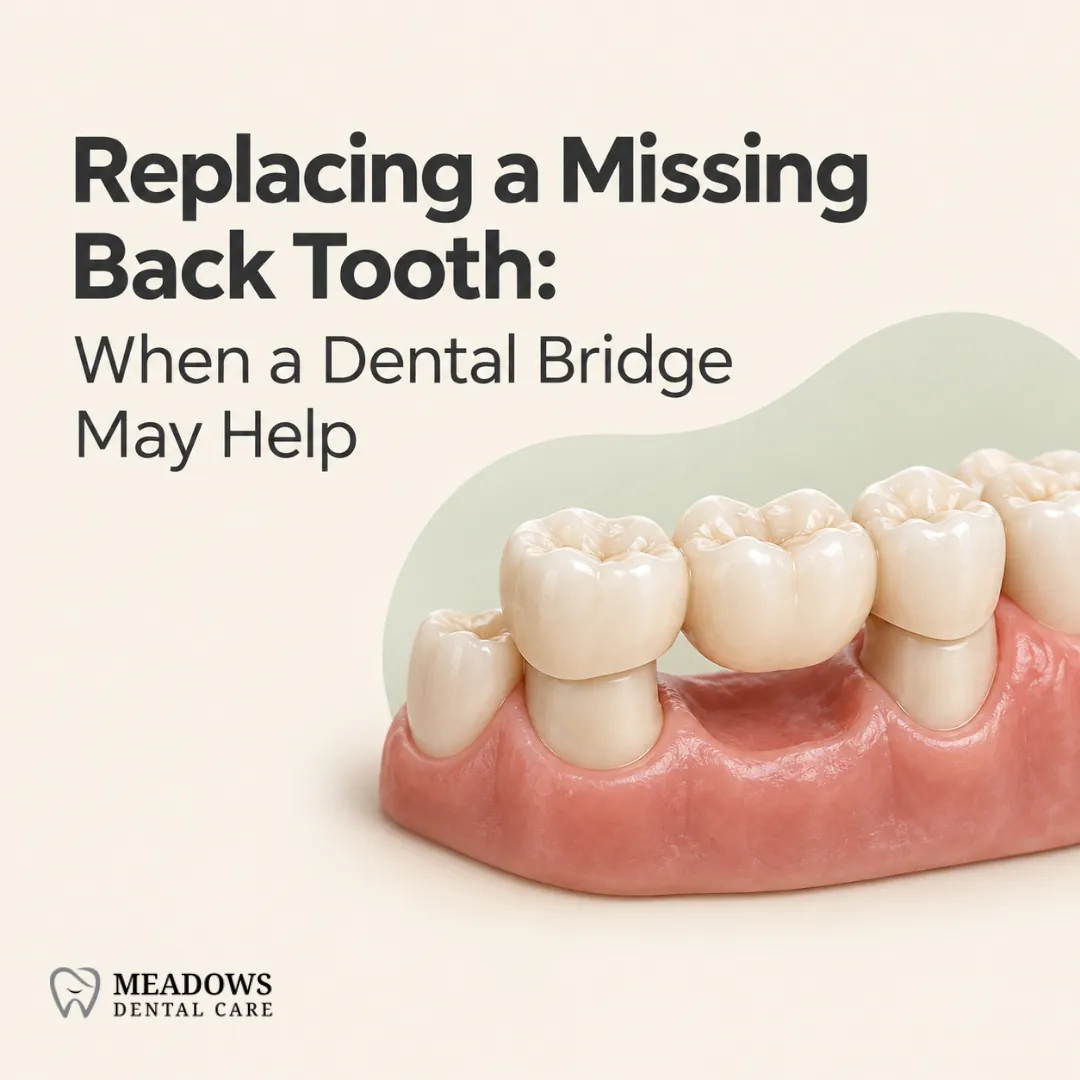
Many people worry after losing a back tooth. They fear trouble chewing, change in bite alignment, and harm to adjacent teeth. Replacing a missing back tooth can help oral health and smile appearance. A dental bridge may suit those who want a quicker dental restoration than a dental implant.
A dental bridge, a type of dental prosthesis, fills the tooth gap and restores chewing function. Here you will understand when a bridge is recommended, the benefits and limitations, and steps for long term success with gum health and cavity treatment in mind.
A dental bridge may suit those missing a back tooth. This restoration helps people maintain their chewing function and smile appearance. It replaces the gap left by lost teeth, which can improve bite alignment. A bridge relies on adjacent teeth for support, ensuring stability.
Dentists recommend this option when a person cannot undergo a dental implant due to certain health issues or lack of sufficient bone. Some patients also seek bridges as a quicker solution to restore their oral health and aesthetics.
The process is generally simple, making it an attractive choice for many who want reliable tooth replacement options.
A dental bridge offers many benefits for those replacing amissing back tooth. It restores chewing function and improves smile appearance. This solution also helps maintain bite alignment, preventing adjacent teeth from shifting.
Patients often appreciate the quick process compared to other treatments like dental implants. Many enjoy immediate results without undergoing extensive surgery.
Limitations come with this option too. A dental bridge relies on adjacent teeth for support, which can lead to future issues if these teeth weaken or decay. Gum health may also decline over time around a bridge, requiring careful maintenance.
Some individuals face challenges with oral hygiene due to hard-to-reach areas caused by the bridge design. Regular visits to the dentist will help address any concerns during checkups about this restoration method as well as overall oral health care.
The dental bridge process involves several steps. First, a dentist evaluates the patient's oral health and determines if a dental bridge is suitable for replacing a missing back tooth.
They prepare the adjacent teeth by removing some of their enamel to make room for crowns. Next, they take impressions of the patient’s mouth to create a custom dental prosthesis that fits perfectly.
For long-term success, proper care is crucial. Patients should maintain excellent oral hygiene by brushing and flossing daily. Regular check-upswith the dentist help monitor gum health and ensure everything functions well.
Using an antibacterial mouthwash can also support overall oral health around the bridge area. A balanced diet promotes strong teeth and gums; avoiding sticky or hard foods helps keep the bridge intact as well.
A dental bridge is a dental restoration that replaces a missing back tooth. It is a common tooth replacement and a dental prosthesis. It helps restore chewing function, bite alignment, and smile appearance. It also stops adjacent teeth from shifting and protects oral health.
A bridge restores chewing function so you can eat better. It keeps bite alignment and prevents uneven wear. It also helps smile enhancement and smile restoration.
A bridge uses adjacent teeth for support. The dentist may shape those teeth or add crowns. That can raise the risk of cavity treatment or a root canal, or root treatment if a tooth has deep damage. The team checks adjacent teeth for health and aesthetics.
A dental implant can replace a missing tooth without using adjacent teeth. It is another tooth replacement and dental restoration option. Implants need surgery and good gum health. Your dentist will weigh the pros and cons for your oral health.
The dental procedure often takes two or more visits. The dentist may do tooth extraction first, or cavity treatment, then shape teeth and fit the dental prosthesis. They may also need a root canal for a damaged root.
Clean around and under the bridge each day to protect oral health. Brush and floss well to keep gum healthy and prevent new cavities. See your dentist for periodic checkups and periodontal care, or gum care, to keep chewing function and bite alignment.
Tell us a little about what you need — we'll be in touch shortly.
9600 S I-35 Frontage Rd Bldg S #275, Austin, TX 78748, United States

Hi! I'm Tooth fairy! Your AI Assistant Ask me anything