Many people feel a sharp pain, see a dark spot, or have trouble chewing. A cracked tooth, deep cavity treatment, or a failed tooth filling can cause this worry. These signs point to tooth damage or tooth decay that may need more than a simple fix.
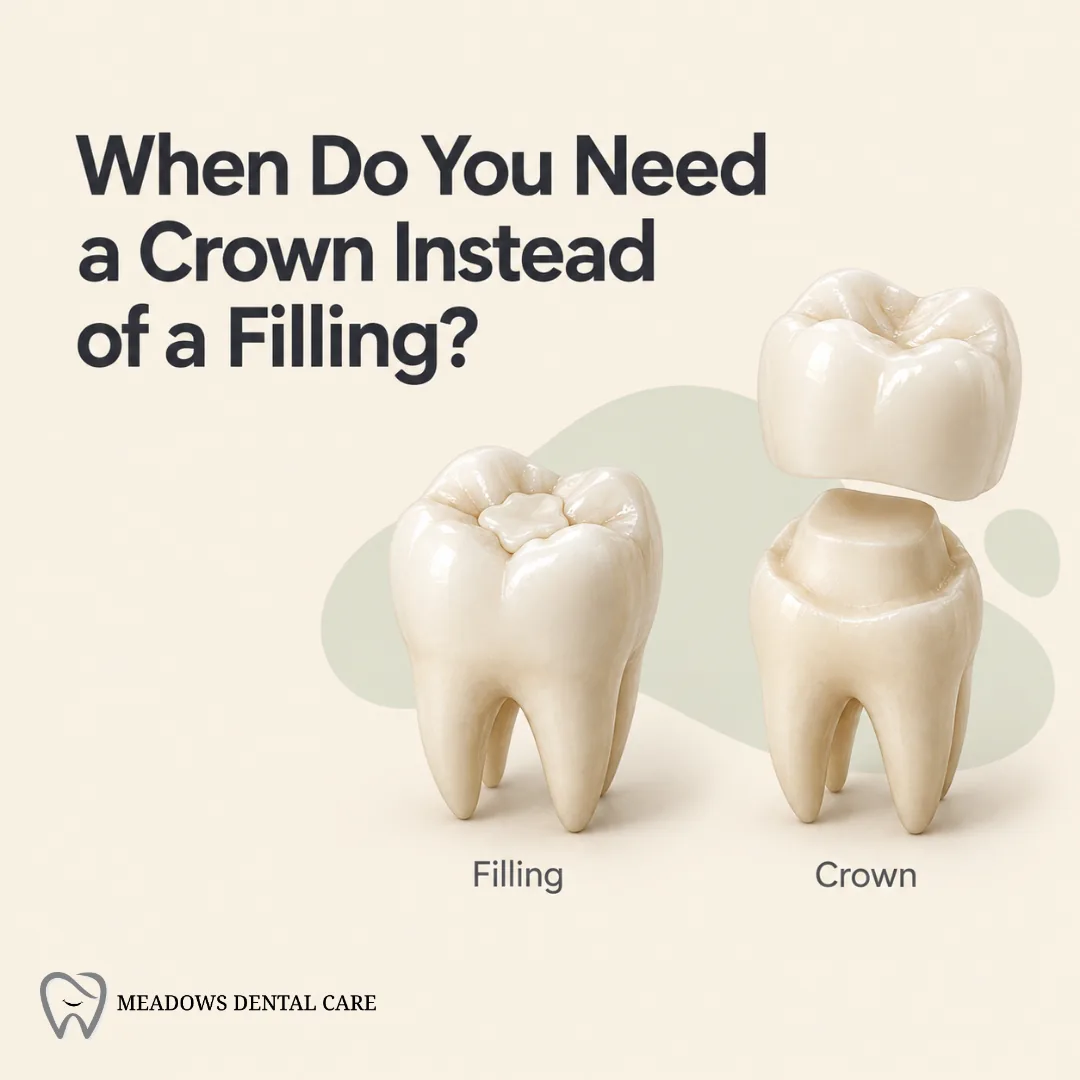
A dental crown covers the whole tooth. It gives more strength than a filling. Dentists use crowns for teeth with big cavities, after endodontics like a root canal, or when a tooth has lost much structure. Here you will know how a dentist decides between a filling and a dental crown.
Key Situations When a Crown Is Preferred Over a Filling
Crowns offer more support in specific situations compared to fillings. Extensive decay or significant cracks often make crowns the better choice for restoring a tooth's strength and function.
Extensive decay or large cavities often require a dental crown instead of a filling. Fillings may not provide enough support for teeth significantly damaged by tooth decay. A dental assessment shows that crowns cover more of the tooth's surface. This choice restores strength and function better than fillings do.
Dentists usually recommend crowns in cases where large areas of decay exist. For example, when decay compromises the tooth structure, the dentist opts for a crown to ensure durability and longevity. Patients with severe tooth damage from extensive cavities can benefit from improved oral health through this restorative dentistry method.
Extensive decay can weaken a tooth’s structure. Significant cracks or fractures make it even more vulnerable. Dentists often recommend crowns in these cases to provide support and strength. A crown covers the entire tooth, protecting it from further damage.
Weakened structures may not hold up under bite pressure, leading to pain or additional fractures. Many times, patients with these issues experience discomfort during daily activities like eating or drinking.
First-hand experience shows that crowns restore proper function and enhance appearance too. Individuals find comfort in knowing their teeth are better protected against future problems. Restorative dentistry focuses on giving damaged teeth a new lease on life while maintaining oral health effectively.
Teeth that receive root canal treatment often need extra support. After this procedure, the structure of the tooth weakens. Dentists usually suggest a dental crown to restore strength and function. A filling might not provide enough protection in these cases.
Failed or failing fillings present another concern. If a filling cracks or falls out, it exposes the tooth to decay and infection. In such situations, replacing the filling with a crown is wise for long-term dental health. This choice offers better durability and helps maintain oral hygiene by preventing further damage.
Severe tooth wear, erosion, or significant loss of tooth structure makes crowns a better choice than fillings. In these cases, teeth lose their strength and shape. A filling might not hold up to the pressures of biting and chewing. Crowns provide more support and protection for damaged teeth.
Dentists often use crowns in restorative dentistry for this reason. They restore function while enhancing appearance. Many patients have experienced improved oral health after receiving dental crowns for severe wear or erosion issues. Crowns can extend the life of a tooth that would otherwise weaken over time due to decay or structural damage.
A dental crown plays a crucial role in restoring function and strength to damaged teeth. It covers the entire tooth, providing support after procedures like root canals or when decay is extensive. Crowns can improve appearance, too. They come in various materials that match natural teeth closely.
Patients needing significant repair often choose crowns over fillings for durability. Fillings may not withstand bite pressure as well as crowns do. This factor becomes especially important when restoring oral health and overall dental aesthetics. A crown ensures lasting results, combining form and function effectively in restorative dentistry.
Dentists examine the strength of a tooth before deciding on a filling or a crown. They also consider how much healthy structure remains and where the tooth sits in the mouth.
Dentists evaluate tooth strength carefully. They examine the remaining healthy structure before recommending a crown or filling. Extensive decay can weaken a tooth significantly. A significant amount of healthy teeth is crucial for holding a filling securely in place. If too much structure is missing, a dental crown will provide better support.
The assessment also includes checking for cracks or fractures. These issues compromise stability and make fillings less effective. For teeth that have undergone root canal treatment, dentists often prefer crowns to restore strength and function effectively.
By focusing on these factors, dentists ensure optimal oral health outcomes for their patients during restorative dentistry procedures like cavity treatment and dental restoration.
Bite pressure plays a crucial role in deciding between a filling and a crown. Teeth that endure significant force during chewing need extra support. For example, molars handle more bite pressure than front teeth because of their location. A dental crown can provide that added strength. It covers the entire tooth surface, enhancing stability against heavy pressures.
Tooth location also matters for restoration options. In visible areas, aesthetic considerations often lead to choosing crowns over fillings, especially for larger restorations. Crowns can improve the appearance of damaged teeth while ensuring long-lasting durability against decay or fractures.
First-hand experience shows that many patients prefer crowns in these situations for both function and beauty in their smiles.
Dentists consider long-term durability when recommending a dental crown or filling. Crowns often last longer than fillings, especially in areas that experience high bite pressure. Patients with extensive tooth decay may benefit from crowns, as they can restore strength and function effectively.
Cost plays a crucial role in this decision too. Crowns typically cost more than fillings due to their materials and labor involved in the dental procedure. Patient-specific factors also matter; someone’s oral health history influences what type of tooth restoration is best for them. For those with multiple failed fillings or severe wear, dentists might recommend crowns for better protection and longevity over less effective options like simple fillings.
You need a dental crown when tooth decay removes most of the tooth. A tooth filling works for small cavities. If a filling will not hold, a crown covers and protects the whole tooth. Dentists use crowns in restorative dentistry and for dental restoration.
Yes. If cavity treatment fails or the decay grows, the dentist may remove the filling. The dentist will do a dental procedure to place a crown. A crown gives stronger tooth repair and lasts longer.
A crown restores the tooth shape and strength. It seals the tooth after cavity treatment and shields it from more tooth decay. Crowns support long term dental restoration and keep oral health steady.
Yes, crowns are part of prosthetic dentistry. A dental crown can sit on your natural tooth or on a dental implant. Dentists pick crowns to finish a dental procedure for tooth repair or dental restoration.
Tell us a little about what you need — we'll be in touch shortly.
9600 S I-35 Frontage Rd Bldg S #275, Austin, TX 78748, United States

Hi! I'm Tooth fairy! Your AI Assistant Ask me anything